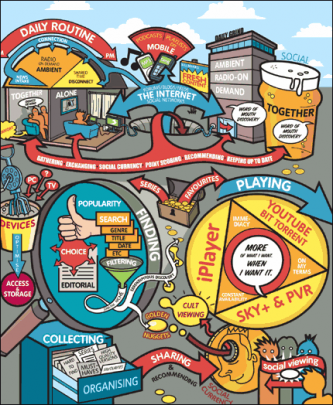
 The media has become a huge part of our lives and a part of our daily routine. The first thing we do when we wake up is check social media and the last thing we do before we go to bed is check social media. However it's not the only type of media that has a strong effect on us. We go the cinema as a form or entertainment as well as from the comfort of our own homes. We easily pick and learn from people around us as well as things we watch including films. They can have many effects on us whether that be positive or negative. Horror may be considered a negative genre of film as typically negative events occur from serial killers, the arrival of the devil or a zombie apocalypse.
 A possible effect that the genre of Horror could have on its audience is imitation. Imitation is the action of using someone or something as model. Audiences could easily imitate actions of characters shown in horror films and mirror them in real life. A true life example that took place due to watching 'American Psycho'. In 2004, Michael Hernandez aged 14, stabbed his classmate to death after imitating behaviour from the serial killers in American Psycho and The Silence of The Lambs.
Another possible effect of watching horror films could Catharsis. Catharsis is a Greek term that Aristotle used to describe the performing arts for purging emotions. It is the process of releasing and thereby providing relief from strong or repressed emotions. Watching a horror allows people to escape from the real world and the reality of their lives. They are distracted from their issues and problems that are happening in the world. As the audience feels scared and frightened they release their emotions through this and feel a sense of relief afterwards. Psychologist Freud suggested that horror was appealing because it traffics in 'thoughts and feelings that have been repressed by the ego but seem vaguely familiar'.
Desensitisation is when the amount of anxiety is reduced by gradually getting used to the object or the situation which causes fear. In terms of media, audiences' reactions have become weaker in terms of reactions to the amount of exposure to violence, death and sex. As some horror films such as the slasher sub-genre contain lots of violence and gore, audiences have slowly become less and less disgusted and shocked by the gruesome acts. The hypodermic syringe model theory suggest that this has happened due to the fact it has simply been accepted by audiences. If the media say something is violent or exposed to us we accept this and as time goes by we become more accustomed to seeing or hearing about violence, death and sex.
Another possible effect of horror films is cultivation differential also known as Mean World syndrome. Mean World Syndrome is a term made by George Gobner to describe how violence related content of mass media makes audiences believe the world is more dangerous than it actually is. The cultivation theory examines the long-term effects of television and suggests that the film industry distort and cultivates reality. Heavy exposure of horror films could lead audiences to believe that the events of the film are happening in the real world. For example for so many years in horror films, events tend to take place when its dark and night in secluded areas so people have grown to have a fear or dark places such as dark alleys because they've had a negative representation in slasher films for example. Also apocalyptic horror films have lead many to believe that there could be a zombie apocalypse where people have gone to extremes to prepare for this. So this has contribute to cultivating the way society thinks.
Horror films could also be triggering to audiences such as giving people anxiety or triggering schizophrenia. This is rather rare but their have been reported cases. Some may say there are no long term effects of horror films as we all know that they are fake and not reality. However is this really the case with all the previously discussed effects?

No comments:
Post a Comment